
News
-

A Practical Field Guide to Selecting Cutters for Highly Abrasive Sandstone Strata
Highly abrasive sandstone can wear down a PDC bit long before the planned drilling interval is complete. For drilling engineers evaluating C1621 conical Diamond composite teeth, the challenge is to balance abrasion resistance, impact durability, and cutting efficiency against the actual formati...Read more -

Recent Innovations in Conical Diamond Enhanced Compacts (DEC) Technology
When a PDC bit loses cutting efficiency in hard or interbedded formations, the problem is not always insufficient diamond wear resistance. Repeated impact, vibration, localized stress, and heat can damage cutting elements long before their usable diamond material is exhausted. The C3129 Conical...Read more -

How to Choose Between Wedge and Ridge Shapes for Your Next Directional Drilling Project
Directional drilling puts specific demands on PDC cutters: they must remove rock efficiently while handling changing loads, vibration and formation transitions. For bit manufacturers and drilling engineers evaluating options such as MR1613A6 Diamond Ridge Tooth, the key question is whether a we...Read more -

C1420 Conical Diamond Composite Teeth: Structure, Applications, and Selection Guide
Selecting the right diamond composite component is important for drilling performance, wear resistance, and service life. Different drilling conditions place different demands on the working surface, composite structure, and overall geometry of a cutting element. For buyers evaluating C1420 coni...Read more -

How Dome PDC Cutters Control Vibration and Maintain Gauge in Complex Bits
For PDC bit manufacturers, reducing vibration and maintaining gauge are closely linked to cutter geometry, impact loading, and the way a bit interacts with changing rock formations. DB1315 Diamond Dome DEC Teeth are worth evaluating for applications where conventional flat cutters may experienc...Read more -

Real-World Field Data Comparing Conical and Flat PDC Cutters in Hard Formations
Hard formations expose the limitations of a PDC cutter quickly: edge wear accelerates, impact damage becomes more frequent, and penetration rates can decline even when operating parameters remain stable. For drilling engineers comparing C1621 conical Diamond composite teeth with conventional fl...Read more -

Why Conical PDC Cutters Fracture Hard Rock Faster Than Traditional Flat Discs
Hard rock drilling often slows down when conventional flat PDC cutters struggle to initiate fractures in strong, abrasive formations. The CB1319 Dome- Conical DEC offers a different approach: its raised, curved working surface concentrates contact forces into a smaller area, helping initiate lo...Read more -

Why Inconsistent Diamond Micron Grading Leads to Sudden Impact Fracturing
ℹ While field crews often blame downhole vibrations or abrasive formations for premature cutter failure, many structural failures originate from microscopic imbalances within the diamond table itself, such as inconsistent micron grading during HPHT sintering for components like the CB1319 Diam...Read more -
Why Skipping Drill Bit Pre-Heating Can Crack Your Brand-New PDC Inserts
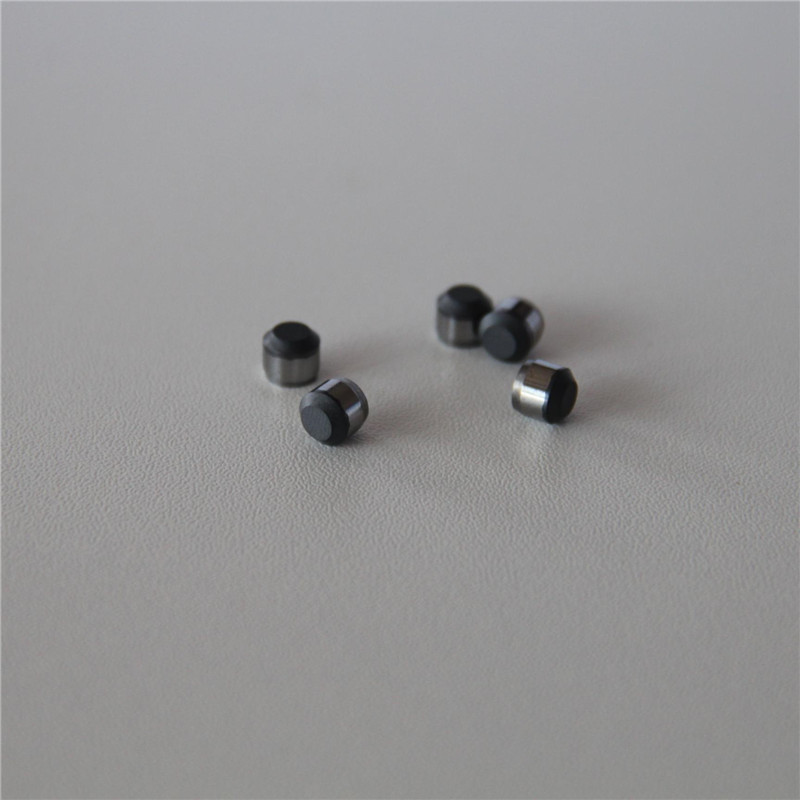
You can crack a brand-new DB0606 Diamond Spherical Compound Teeth insert during bit assembly. Brazing heats it too fast or unevenly, and there it is. You might not catch it until inspection—or until the bit’s already downhole. By then, the crack’s been growing. Every hit. Every load...Read more -

How to Identify Which Wear Mode Is Eating Your Sintered Diamond Tables
When a PDC bit starts losing penetration rate or needs to come out earlier than planned, the diamond table usually has something to say. For engineers looking at S1313HS15 Diamond composite sheet performance, the trick is figuring out whether the cutter is dealing with abrasive wear, impact dam...Read more -

Why Traditional Flat PDC Cutters Fail Prematurely in High-Angle Deviated Wells
Premature cutter damage in high-angle and highly deviated wells can turn a technically sound PDC bit into an expensive source of trips and lost drilling time. The MP1305 diamond curved surface cutter concept addresses one of the key weaknesses of conventional flat cutting surfaces: concentrated...Read more -

PDC Cutters for Soft-to-Hard Transition Zones | Selection Guide
Interbedded formations—where a bit moves from soft shale into hard limestone, chert, or abrasive sandstone in a single run—are where PDC cutters get destroyed. A cutter that handles the soft section easily can chip the moment it hits a hard streak, and the damage usually shows up as edge chippin...Read more


